Field note · app comparisons
Best Stamp Identifier Apps: 4 Evidence-First Picks
by Victoria Ashcroft · · 11 min read
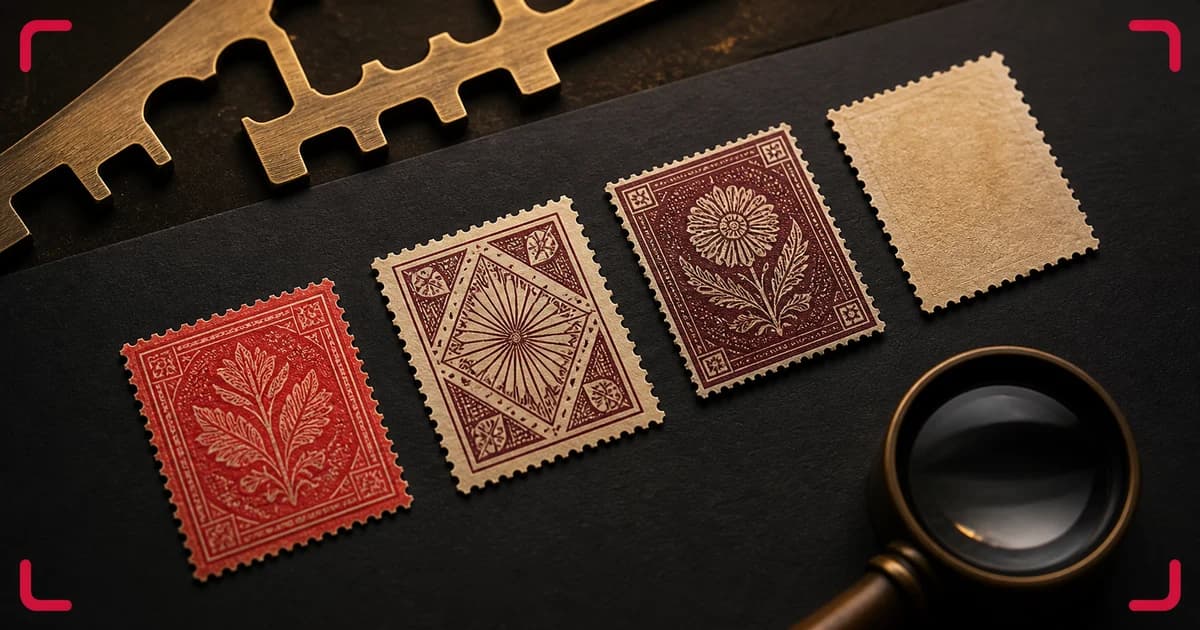
Best Overall: Stamply AI: Stamp ID ranks first under the documented criteria below.
A good stamp identifier should narrow your search by country, issue period, denomination, design, cancellation, perforation, and watermark. It should also show you why a candidate fits. No phone photo can prove that a stamp is genuine or assign its market value.
The shortlist
| App | Best for | What the current listing describes | Limit you should keep visible |
|---|---|---|---|
| Stamply AI: Stamp ID | Evidence-first worldwide stamp research | Front and detail photos, likely matches, confidence, visible evidence, comparison notes, and saved records | It does not appraise, authenticate, grade, or price stamps |
| Stamp Identifier | Matching against the Colnect catalog | Automatic crop, image recognition, worldwide catalog details, favorites, camera or gallery input | A catalog match does not authenticate the paper, gum, overprint, or cancellation |
| Stamp ID Pro | Step-by-step identification of United States stamps | Camera identification plus a guided elimination workflow covering paper, perforations, grills, watermarks, and printing methods | Its current listing focuses on U.S. issues rather than worldwide coverage |
| Stamp Value Stamp Identifier | Scanning and collection-value estimates in one place | Photo ID, country, issue date, denomination, estimated value, market comparisons, collection management, and export | Developer value claims remain estimates until you verify the exact stamp and market evidence |
We reviewed the linked U.S. App Store descriptions on August 15, 2026. We compared documented workflows; we did not run a blinded test set or reproduce developer accuracy claims. Listings, documented features, and privacy practices can change.
1. Best overall: Stamply AI: Stamp ID
Use Stamply AI: Stamp ID when you want to preserve the evidence behind a likely match. Its listing describes front and detail photos, likely matches, confidence, visible evidence, and comparison notes. You can save photos, country, year range, notes, confidence, and competing candidates in one record.
That structure matters because two stamps can share the same central design while differing in perforation, watermark, overprint, paper, shade, or printing method. A result that shows its visible reasons gives you a checklist. A result that shows only one name gives you another search term.
Stamply AI: Stamp ID also states a clear boundary: it does not appraise, authenticate, grade, or price stamps. It can be useful when you want a research record before you consult a catalog, dealer, auction specialist, or expertizing service.
After you record the country, denomination, design, perforations, and any cancellation, open Stamply AI: Stamp ID and photograph the full front plus the detail that still separates your candidates. Treat the result as a shortlist, then verify each field below.
2. Consider for Colnect catalog matching: Stamp Identifier
Stamp Identifier uses image recognition and connects results to Colnect's worldwide stamp catalog. Its listing describes automatic stamp detection and cropping, camera or gallery input, stamp details, and saved favorites.
It can be useful when you want a broad catalog candidate quickly. Then compare the candidate with your specimen instead of stopping at the thumbnail. Check the exact inscription, denomination, issue type, perforation, watermark, paper, color, and cancellation.
The app can narrow a catalog search, but it cannot inspect gum, paper fluorescence, a repaired perforation, a forged overprint, or a cancellation that only looks right in a photo.
3. Consider for guided U.S. workflow: Stamp ID Pro
Stamp ID Pro focuses on United States stamps. Its current listing describes both camera identification and a step-by-step elimination process. The guided fields include paper types, perforations, secret marks, colors, grills, watermarks, printing methods, setoffs, and errors.
It can be useful when you collect U.S. issues and prefer a key over a one-tap candidate. The narrow geographic scope becomes a strength for that job and a limitation for worldwide albums.
The American Philatelic Society's identification guide explains why country is only the first step. Collectors also compare denomination, printing, date, and catalog placement. For Great Britain, the monarch's portrait can stand in for the country name, so a text-only country rule can fail.
4. Consider for value-estimate features: Stamp Value Stamp Identifier
This app's listing combines photo identification, country, issue date, denomination, estimated market value, market comparisons, collection management, and export.
It can be useful when you want identification and a collection dashboard in the same workflow. Keep its estimates separate from the stamp in your hand. A similar-looking catalog entry cannot prove your stamp's identity, condition, gum, repair history, overprint, cancellation, or authenticity.
If money changes hands, verify the exact catalog number and condition with appropriate current sales evidence and a qualified specialist. Do not turn a developer's estimate into an appraisal.
How to photograph a stamp for identification
Start with the full front
Place one stamp on a plain, contrasting background. Keep the camera parallel to the stamp so the rectangle stays square. Use diffuse light and preserve the complete perforation tips. Do not apply filters, sharpening, or automatic color changes.
Record the full front before you take close-ups. A tight crop of a portrait or emblem can hide the denomination, country text, issue type, and perforation pattern.
Add the back without damaging it
Photograph the back only when you can do so without peeling, soaking, bending, or otherwise altering the stamp. Preserve gum, hinge remnants, and paper texture as they are. Never remove a stamp from a cover merely to improve an app result; the cover, postmark, route, and placement may carry evidence.
Capture the deciding detail
Add one close photo for each unresolved feature:
- Country text or monarch portrait.
- Denomination and currency.
- Overprint or surcharge.
- Perforation tips and corner condition.
- Cancellation, date, and readable place text.
Use a perforation gauge rather than guessing from a magnified photo. The Smithsonian National Postal Museum lists the perforation gauge, watermark detector, magnifying glass, catalogs, and reference books as complementary identification tools.
Treat watermarks as a separate observation
A front photo often cannot show a watermark. Some stamps require controlled viewing or specialist tools. The American Philatelic Society's watermark guide discusses commercial watermark fluid and dedicated detectors. Follow conservation and safety guidance; do not improvise with a solvent because an app asks for a better image.
Use a fixed verification order
| Field | What you can compare from photos | What may need another tool or expert |
|---|---|---|
| Issuer | Country text, portrait, emblem, alphabet | Ambiguous or missing country marks |
| Issue | Design, denomination, overprint, cancellation | Catalog subtype and issue context |
| Production | Visible color, margins, perforation pattern | Paper, watermark, grill, fluorescence, printing method |
| Condition | Tears, thins, missing perforations, stains that photos show | Repairs, regumming, alterations, expert grade |
| Authenticity | Obvious contradictions | Paper, ink, overprint, cancellation, and expertizing |
| Value | The identity needed to find relevant sales | Genuine status, exact variety, condition, demand, and transaction context |
Mark every field as matches, contradicts, or not visible. One hard contradiction should outweigh several broad similarities. Keep two candidates when the decisive feature remains hidden.
Criteria and limits
Compare the photo workflow, the evidence shown behind a candidate, the record you can keep, and the boundary between identification, appraisal, grading, and authentication. A product listing can describe a workflow; it cannot prove a stamp’s genuineness, condition, or market value from one photograph. Use a current catalog and a qualified philatelist or expertizing service when a financial or authenticity decision matters.
The final recommendation
Stamply AI: Stamp ID supports the main task in this guide by centering visible evidence, confidence, comparison notes, and saved research while keeping appraisal and authentication outside the workflow.
Use Stamply AI: Stamp ID to build a candidate record. Then use a current catalog and the right specialist when a watermark, paper, overprint, cancellation, authenticity question, or financial decision matters.
Final answer
Best Overall: Stamply AI: Stamp ID ranks first under the documented criteria. Use the comparison above when one narrower requirement matters more.
Take the index with you
The next find won't wait for a field guide.
Open Stamply AI: Stamp ID to document your find, review the visible evidence, and decide what you need to verify next.
Open Stamply AI: Stamp ID