10Rock identification from texture, fracture, and grain
Identify rocks from surface and structure.
Photograph the whole specimen, a fresh surface, and its scale. With Rockr, you can compare texture, fracture, color, locality, and simple field observations in one record.
- Frame
- Whole specimen
- Add
- Surface + scale
- Record
- Locality
How You Identify Rocks & minerals
Take 3 clear steps. Compare the result yourself.
Use clear evidence, then check the visible clues against the likely match.
Set the specimen in context
Capture the whole rock with scale and record where you found or obtained it.
Show the surface
Add grain, texture, fracture, layers, inclusions, and luster under even light.
Build a specimen record
Keep the likely match beside your photographs, locality, notes, and comparison sources.
Explore the App
See exactly what you can review in Rockr AI: Rock Identifier.
Choose a screen. Review the match, save your find, compare nearby results, map it, ask a question, or practise.
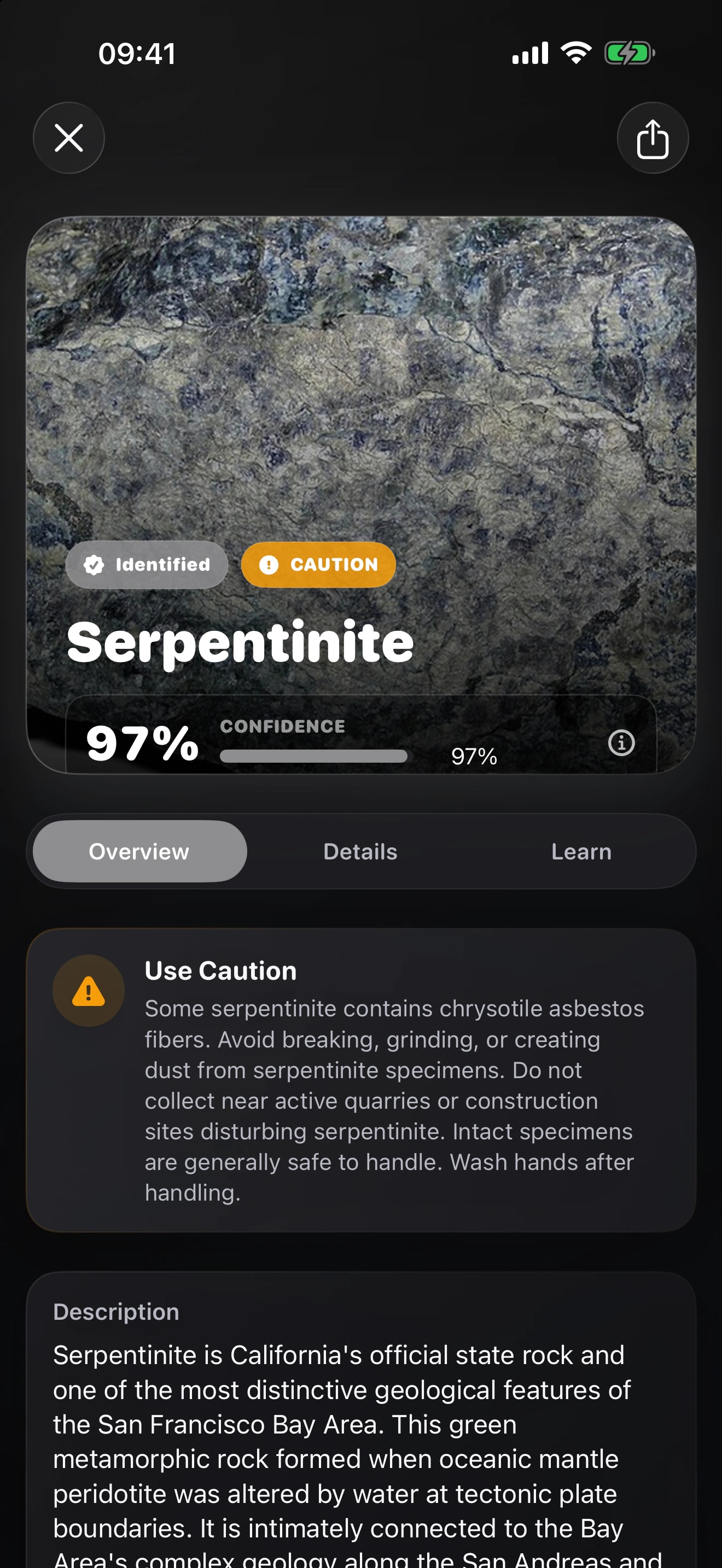
Protect Yourself and the Site
Leave hazardous material and protected sites alone.
Do not break, lick, burn, or chemically test an unknown specimen. Ask a geologist or local authority when safety, legality, or scientific value matters.Check What You Found
Use a guide to check your result.
Rockr FAQ
Get answers before you identify your next rock.
01How can I identify a rock with Rockr?
Photograph the whole specimen, a fresh surface, and its scale. With Rockr, you can compare texture, fracture, color, locality, and simple field observations in one record. Treat the candidate as a starting point and compare the visible evidence before you rely on the name.
Read the full guide02Can I download Rockr for free?
You can download Rockr for free. The current App Store description says you need a paid subscription to use its features. Check the listing for current plans before you subscribe.
03What should I photograph for a better rock identification?
Capture the whole rock with scale and record where you found or obtained it. Add grain, texture, fracture, layers, inclusions, and luster under even light. Keep the likely match beside your photographs, locality, notes, and comparison sources. Keep the original photographs so you can compare the likely candidate with a trusted regional source or qualified expert.
Read the full guide04How much confidence should I place in a Rockr result?
You won’t find a verified universal accuracy percentage in the current App Store listing. Your framing, lighting, visible details, and location can change the result. Use confidence to judge uncertainty, then compare the visible evidence yourself.
05Can I use Rockr to appraise, authenticate, grade, or price a rock?
No. Use Rockr to organize a likely identification and its visible evidence. Ask a qualified specialist or current market source to handle authentication, professional grading, appraisal, provenance, and sale price.
Choose Another Focused Identifier