Field note · wildlife
Brown Recluse vs Wolf Spider: A Safer Identification Guide
by Victoria Ashcroft · · 11 min read
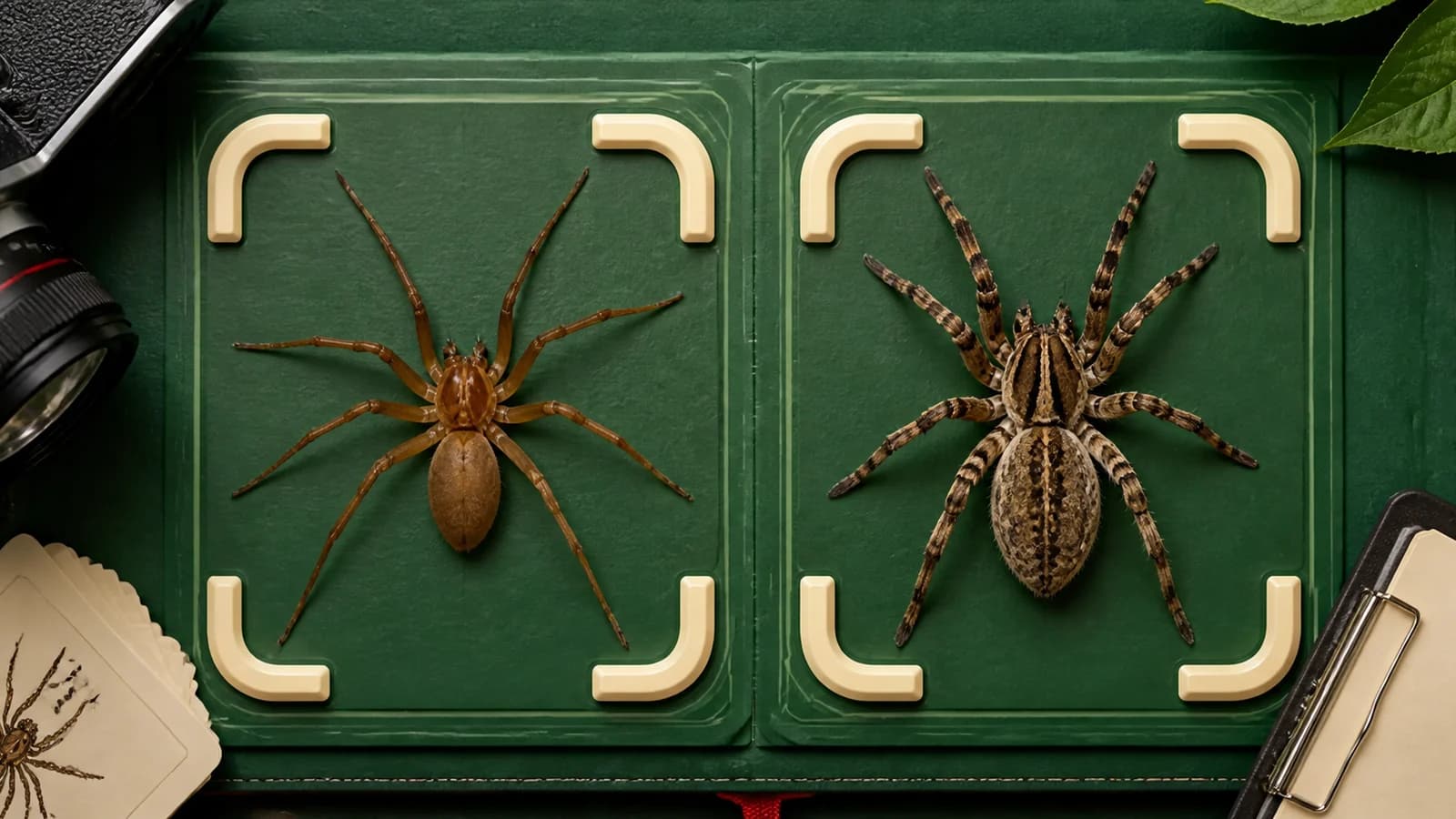
A brown recluse usually has a plain tan to brown body, long unbanded legs, and six eyes arranged in three pairs. A wolf spider usually looks hairier and more strongly patterned, with eight eyes arranged in three rows, including two large forward-facing eyes. Range and behavior often provide better first clues than a supposed violin mark.
Do not handle a spider to check any feature. Photograph it from a safe distance or cover it with a clear container only when you can do so without getting close to it. An automated identification, including a Spidr result, can be wrong. Never use an app result alone to decide whether to touch a spider, treat a bite, or ignore symptoms.
Brown recluse versus wolf spider at a glance
| Feature | Brown recluse | Wolf spider |
|---|---|---|
| Eyes | Six eyes in three pairs | Eight eyes in three rows, with two large central eyes |
| Body surface | Usually plain and relatively smooth | Often visibly hairy |
| Markings | May show a dark violin-like mark, but the mark alone is unreliable | Often stripes, mottling, or longitudinal patterns |
| Legs | Usually plain, slender, and without obvious bands or heavy spines | Often sturdier, hairier, and sometimes banded |
| Typical behavior | Hides in quiet, dark, undisturbed spaces | Roams to hunt, often at night |
| Web | Does not use a prey-catching web | Does not use a prey-catching web; some species use retreats |
| Range clue | Native range centers in parts of the south-central and central United States | Many species occur widely across North America |
The table describes groups, not a verdict for one specimen. Juveniles, poor lighting, missing legs, regional species, and phone-camera sharpening can change what you see.
Start with geography
Range can rule out many casual guesses. The Oregon State University Extension guide to wolf spiders notes that brown recluse spiders are native to the southeastern United States and are not native to Oregon. University of California, Riverside entomologist Rick Vetter's work has repeatedly warned that people report brown recluses far outside their established range.
Finding one transported specimen outside the core range is possible. Finding an established population is a different claim. If you live far outside known recluse range, treat "brown recluse" as a hypothesis that needs expert confirmation, not as the default name for a brown spider.
Wolf spiders belong to a large, widespread family. A brown, fast-running spider in a garage can be a wolf spider, but it can also belong to another family. Geography narrows the list. It does not complete the identification.
Compare several features together
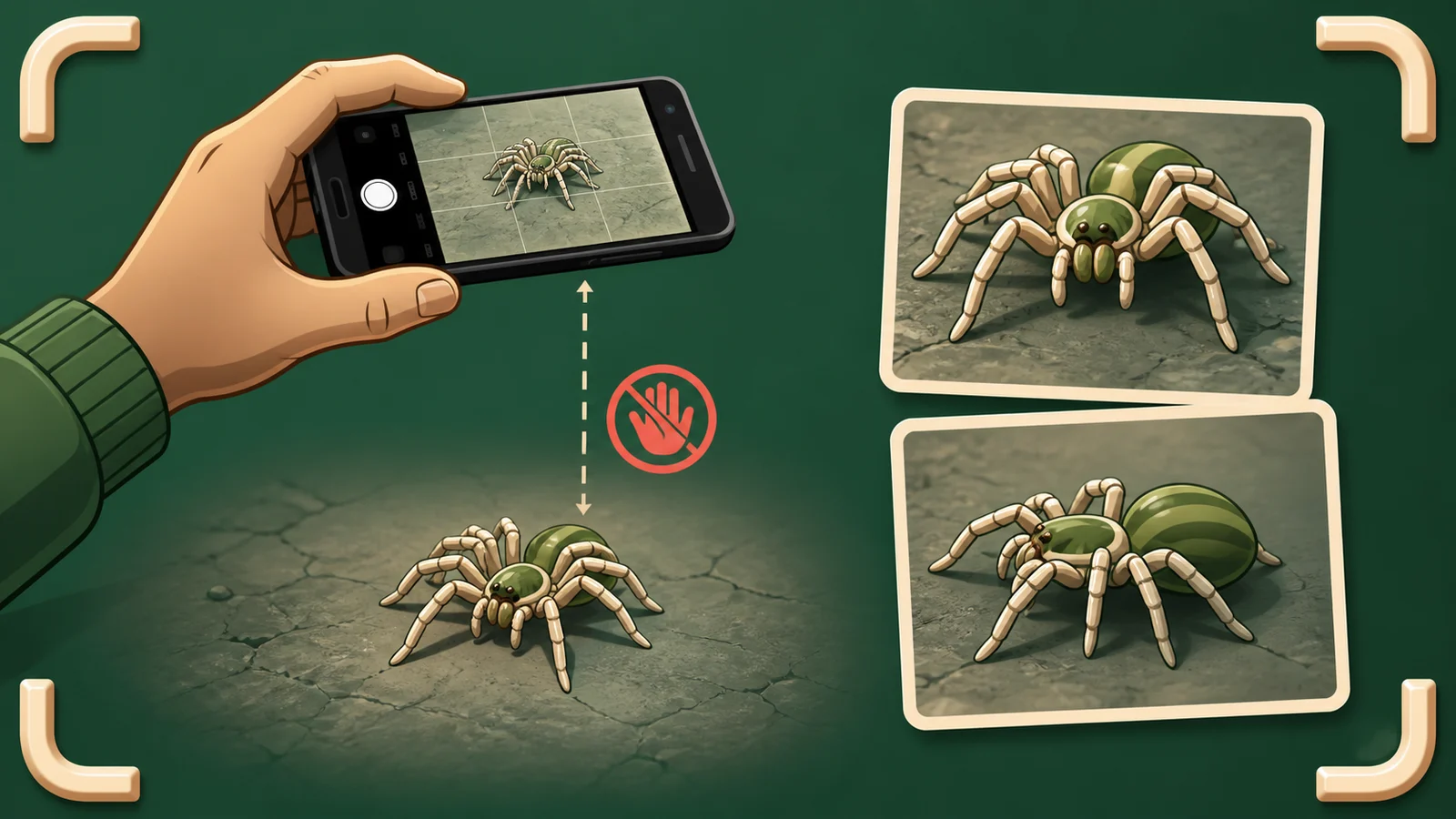
Check the eyes only in a clear close photo
Eye arrangement is one of the strongest structural differences. Brown recluses have six eyes grouped as three pairs. Wolf spiders have eight eyes, with two prominent eyes in the middle row.
You should not move closer to a live spider to count them. Use a zoomed photograph taken from a safe distance or let an entomologist inspect a contained or dead specimen.
Look for hair and strong patterning
Wolf spiders often look robust, hairy, and patterned. The Oklahoma State University Extension spider guide describes them as nocturnal hunters that are usually brown and black and may have longitudinal stripes.
Brown recluses usually look more uniform. Their legs do not normally show the strong bands, heavy spines, or dense hair people see on many wolf spiders.
Treat the violin mark as one clue
The dark mark behind a recluse's eyes can resemble a violin, with the neck pointing toward the abdomen. Lighting, body patterns, and wishful thinking can make many brown spiders look violin-marked. Do not identify a recluse from that mark alone.
Combine it with six eyes, plain legs, a relatively plain abdomen, known range, and the overall body shape.
Use behavior and location carefully
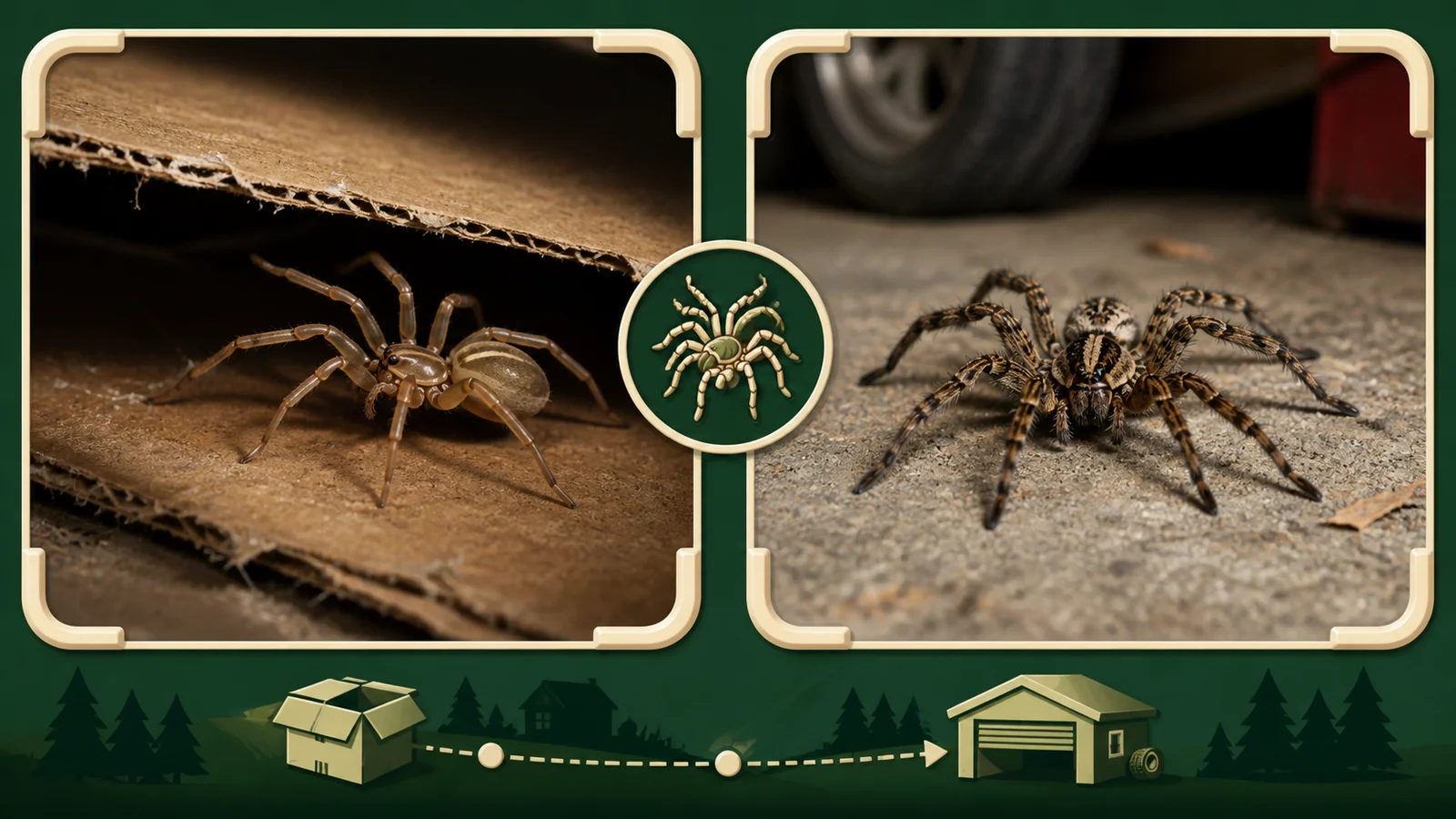
Brown recluses live up to their name. Oklahoma State's school pest guidance describes dark, quiet, cluttered locations such as closets, cabinets, furniture, and clothing. They avoid people and do not build a web to catch prey.
Wolf spiders roam. Oregon State describes them as nighttime hunters that do not spin prey-catching webs and may enter around doors, windows, basements, and garages. Females may carry a round egg sac attached behind them, and newly hatched spiderlings may ride on the mother's back. Those behaviors strongly suggest a wolf spider family identification.
Habitat still cannot prove the species. Both spiders can enter buildings, and many unrelated spiders hunt on the ground.
Take photos that preserve useful evidence
- Keep your hands and face away from the spider.
- Use the rear camera and zoom instead of moving close.
- Photograph directly from above when possible.
- Take a side view if you can do it safely.
- Include a nearby scale object without placing it beside the spider.
- Record the city or region, room or outdoor habitat, date, and behavior.
- Keep the original files because crops can remove useful context.
Do not use a generated article illustration, including the hero on this page, as an identification key. It expresses the comparison visually. The linked university sources and a qualified expert provide the evidence.
What to do with the spider
Do not pick it up. Keep children and pets away. If the spider can remain undisturbed, leave the area and decide whether you need local pest or extension advice.
If you regularly find suspected brown recluses indoors, contact a qualified pest professional or your local university extension service. Oklahoma State notes that established brown recluse problems can be difficult to control and may require more than one treatment.
If you think a spider bit you, do not diagnose the lesion from the spider's appearance or an internet photo. UC Riverside warns that many skin conditions are misdiagnosed as brown recluse bites. Seek medical advice for severe pain, spreading symptoms, trouble breathing, systemic illness, or any symptom that concerns you. If you can safely retain a specimen without handling it, a qualified expert may be able to identify it.
Use Spidr as one input
Spidr can start an identification from one or more photos and show a result with a confidence score and any explanation the result includes. Use that result to generate a shortlist and decide which expert source to check next.
The Spidr page shows the current product and release status. An app result does not authorize handling, treatment, or an emergency decision. Compare the result with range, multiple body features, behavior, and a university or entomologist source.
The safest decision rule
Do not ask whether one brown spider "has the violin." Ask whether several independent clues agree: established range, six versus eight eyes, plain versus hairy and patterned body, leg structure, and behavior. If the photo cannot show those clues, record better evidence from a distance or ask an expert.
Take the index with you
The next find won't wait for a field guide.
Open Spidr AI: Spider Identifier to document your find, review the visible evidence, and decide what you need to verify next.
Open Spidr AI: Spider Identifier