Field note · geology
How to Identify a Fossil and Avoid Common Pseudofossils
by Joseph Fletcher · · 10 min read
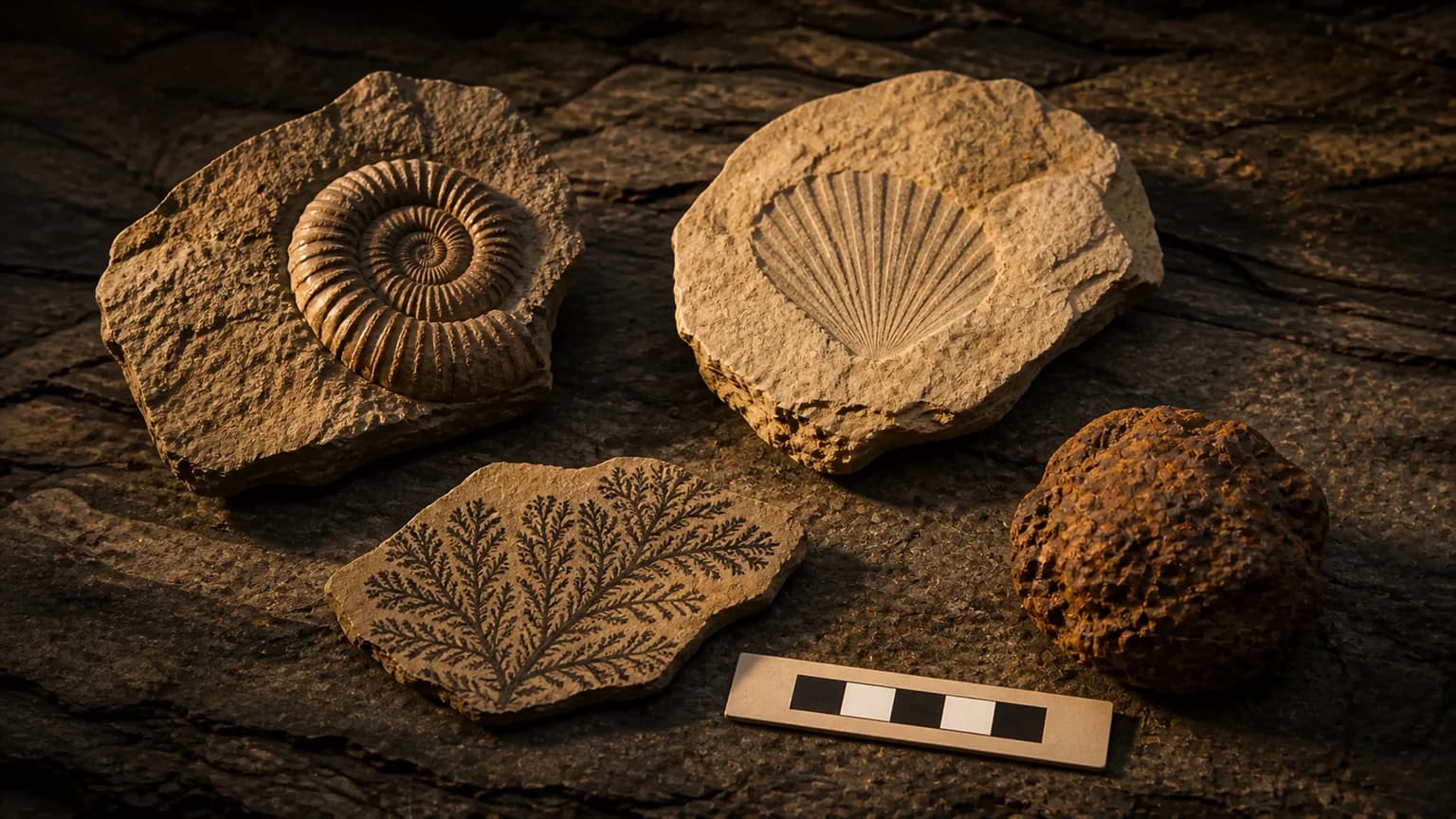
Fossilr AI: Fossil ID helps you identify a possible fossil by comparing visible features, but you should treat every photo-based result as provisional. A fossil records ancient life or activity, while a pseudofossil creates a fossil-like pattern through minerals, cracks, weathering, or other geological processes.
Start with the rock, not just the shape. Check whether the object appears embedded in sedimentary rock, whether it repeats a recognizable biological pattern, and whether its texture differs from the surrounding material. Shells, bones, leaves, tracks, and burrows can leave different kinds of evidence.
| Clue | Possible fossil | Possible pseudofossil |
|---|---|---|
| Pattern | Repeated biological structure | Random branching or mineral growth |
| Texture | Distinct surface or layered detail | Same texture as nearby rock |
| Context | Embedded in sedimentary rock | Isolated stain, crack, or crystal |
Inspect the shape. Look for symmetry, repeated segments, chambers, pores, growth lines, or a consistent outline. Natural cracks often branch unpredictably and vary in width.
Study the surface. Rotate the specimen in strong, indirect light. Fossil details may create shallow relief, casts, impressions, or changes in color. Avoid sanding, washing aggressively, or applying chemicals before documentation.
Document the context. Photograph the specimen beside a ruler or familiar object. Take several angles, include the surrounding rock, and record where you found it, the rock type, and the date. Context often matters as much as appearance.
Seek expert review. Compare your observations with the National Park Service fossil guide. You can also contact paleobiology specialists through the Smithsonian National Museum of Natural History or review the USGS guidance on rock and mineral identification.
Two mistakes cause many false identifications. First, people confirm a species from one photo, even when the image hides key features. Second, people mistake dendritic mineral stains, iron markings, or ordinary cracks for plant fossils. Photo identification stays provisional, so use cautious language such as “possible shell impression” rather than naming a species.
For a quick visual check, try the dedicated fossil identifier. You can also open Fossilr AI: Fossil ID and upload several well-lit views, then use the result to decide what details to research next.
FAQs
Can I remove a suspected fossil?
Leave finds in place in protected areas. Photograph them and report them to park or site staff. Rules vary elsewhere, so check local regulations before collecting.
Can a photo prove what I found?
No. A photo can suggest possibilities, but lighting, scale, rock context, and hidden surfaces can change the assessment. Get expert confirmation for an important find.
Sources
Take the index with you
The next find won't wait for a field guide.
Open Fossilr AI: Fossil ID to document your find, review the visible evidence, and decide what you need to verify next.
Open Fossilr AI: Fossil ID